When a Caveat Becomes a Counter-Offer: Reading Risk in a 2026 UK Survey Report
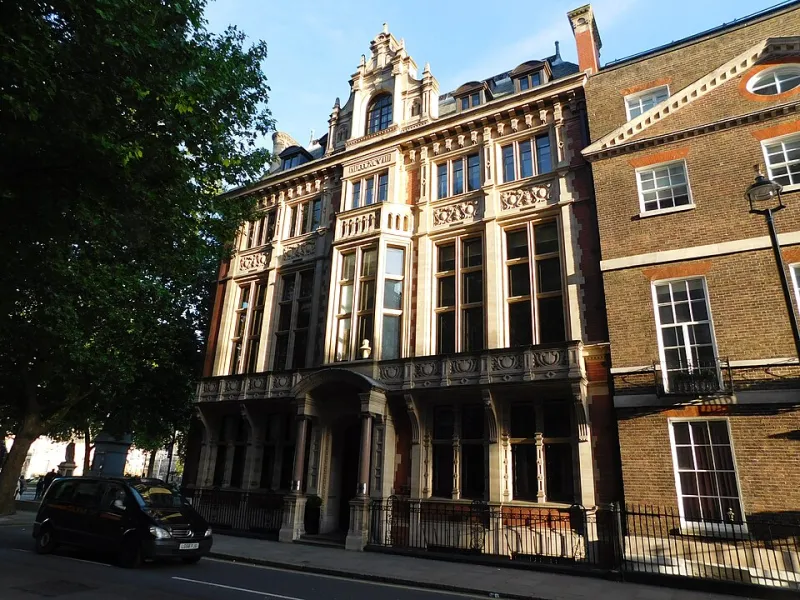
Photo: Paul the Archivist, CC BY-SA 4.0, via Wikimedia Commons
A survey report is one of the few documents in a property purchase that is written specifically for the buyer, yet it is often read as a list of future DIY tasks rather than a statement about risk. That is understandable. Surveyors use measured, hedged language because they are reporting on a building they have inspected, not tested, and because they must avoid overstating certainty. The result is that a phrase such as ‘monitor’ can sit alongside a note about a cracked lintel with little obvious difference in tone. For a buyer in 2026, the task is to translate that language into a negotiating position.
Why survey language is deliberately cautious
A Level 2 HomeBuyer report and a Level 3 Building Survey serve different purposes, but both describe condition rather than value. The surveyor is not usually instructed to provide a valuation, and even where a valuation is included, it is not a repair schedule. The mortgage lender’s valuation is a separate exercise, often desktop-based or brief, and it should not be treated as a second opinion on structural condition.
The caution in survey reports is not evasion. It reflects the limits of a visual inspection: floors may be covered, roofs may be partly inaccessible, drains are rarely tested, and the surveyor cannot know what has been repaired historically without documentary evidence. A phrase such as ‘further investigation advised’ is therefore a signal that the surveyor has seen something that cannot be resolved within the scope of the inspection. Whether that justifies a lower offer depends on the likely cost, urgency and uncertainty involved.
Five phrases that deserve a price conversation
‘Monitor’
This is one of the most misunderstood phrases in a survey. It usually means the surveyor has observed something that is not currently causing concern but could deteriorate. A slightly uneven path, a hairline crack in plaster, or a minor area of damp staining may be worth monitoring. It does not automatically mean the property is defective, and it rarely justifies a large reduction on its own.
The key question is whether the item is stable. If the report refers to monitoring without any previous record, ask the seller whether there is a recent specialist report, a repair invoice, or a warranty. If the item is in a structural area—around a bay window, a roof valley, or an extension junction—a modest allowance for future repair may be reasonable. If it is cosmetic, adding it to a repair list is usually more appropriate than reopening the price.
‘Further investigation advised’
This phrase should be treated as an unresolved risk rather than a repair item. It may relate to drainage, damp, roof structure, electrical installation, or movement. The surveyor is effectively saying that the available evidence is insufficient to determine cause or severity.
Before exchange, the buyer should obtain the relevant specialist report. That might be a drainage CCTV survey, a damp and timber report, a structural engineer’s assessment, or an electrical inspection. The report should identify the cause, the remedy and an indicative cost. A price adjustment can then be based on evidence rather than anxiety. If the seller refuses access for further investigation, that refusal is itself useful information.
‘Signs of historic movement’
Historic movement is not the same as active movement. Older properties often show minor settlement that has long since stabilised. The phrase becomes more serious when it is accompanied by references to progressive cracking, recent repointing, unequal door openings, or movement near a change in ground conditions.
Ask for evidence of monitoring: tell-tale gauges, crack width records, structural reports, or underpinning warranties. If the movement is described as historic and no monitoring has been carried out, a structural engineer’s report is the sensible next step. If the report identifies active movement affecting the main structure, the buyer should consider whether the property remains mortgageable on acceptable terms. In some cases, the right decision is to walk away rather than negotiate.
‘Localised dampness’
Damp is a broad term covering condensation, penetrating damp, rising damp and plumbing leaks. The remedy and cost vary enormously. A patch of dampness near a shower may be a failed sealant joint; dampness at the base of an external wall may indicate a bridging damp-proof course or defective drainage.
A damp and timber specialist should identify the source, not simply recommend a chemical damp-proof course. Buyers should be wary of generic quotations that propose extensive treatment without a diagnosis. If the source is clear and the repair is modest, a repair-list entry may be sufficient. If the damp is widespread or linked to structural defects, it belongs in the price discussion.
‘Not tested’ or ‘assumed satisfactory’
These phrases matter because they define the limits of the survey. Services are often not tested, concealed areas are not opened up, and compliance with building regulations may not be verified. A report that says a roof covering is assumed satisfactory is not a guarantee that it is watertight.
Buyers should request certificates for electrical work, gas installations, replacement windows and any recent extension. Where works required building regulations approval, ask for the completion certificate or a regularisation certificate. If the paperwork is missing, the buyer should price the risk of obtaining retrospective approval or remedial work.
Turning a caveat into a negotiating position
A renegotiation should be proportionate. The strongest position is built on three figures: the likely cost of the work, the urgency of the work, and the uncertainty that remains. A survey note that leads to a £600 drainage repair is a repair-list item. A note that leads to a £12,000 structural repair is a pricing issue. A note that cannot be resolved before exchange is a risk that either the seller prices or the buyer accepts.
Evidence should be requested in writing through the conveyancer. Specialist reports, itemised quotations, warranty documents and building control certificates are all useful. The buyer should avoid presenting a long list of minor defects as a reason for a large reduction; that approach often hardens the seller’s position. A focused counter-offer, supported by one or two specialist reports, is more likely to be taken seriously.
When to walk away
The decision to withdraw is not a failure of negotiation. It is a risk judgement. Serious structural movement, unresolved drainage defects affecting foundations, a roof structure in need of replacement, or a property that cannot be insured on normal terms may justify withdrawal. So may a seller who is unwilling to provide access for essential investigations.
A survey report should not be read as a verdict on whether a property is good or bad. It is a map of known and unknown risks. The buyer’s advantage lies in reading that map carefully, requesting the right evidence, and deciding which risks should be reflected in the price rather than absorbed into a to-do list.