The Small Print That Moves the Hammer: Pricing Risk in an Auction Legal Pack

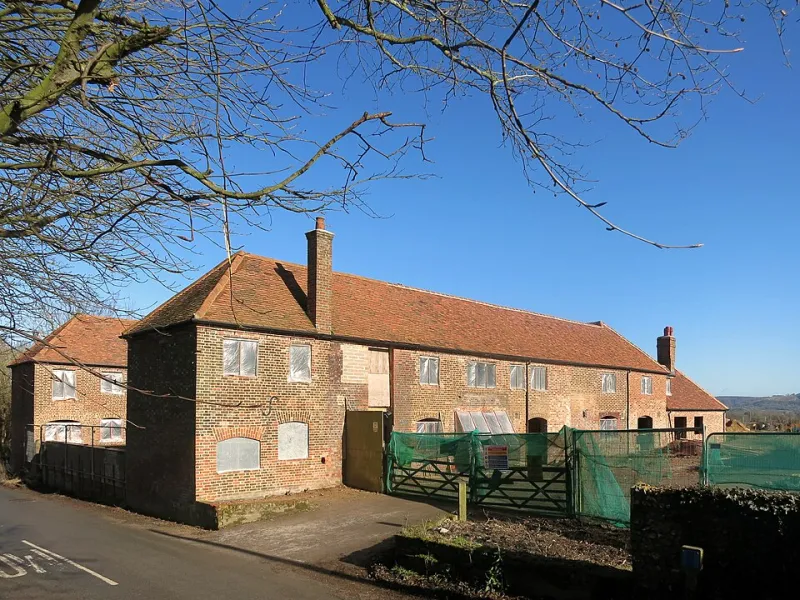
Photo: Craig Wallace, CC BY-SA 2.0, via Wikimedia Commons
At a UK property auction, the fall of the hammer is not the start of a negotiation. It is the end of one. By the time the lot is called, the legal pack should already have been read, challenged and priced. Yet many bidders still treat the pack as a completion formality rather than a commercial document. That is an expensive habit.
As of November 2026, auction buyers are operating in a market where competition for well-priced stock remains firm, but lending and insurance scrutiny have not softened. A legal pack is therefore best understood as a risk register. Each clause has a cost, a delay, an insurance consequence or a resale implication. The bid should reflect all four.
This article is not legal advice. Auction contracts are usually unconditional, and a conveyancer should review the pack before you bid. The purpose here is narrower: to help you turn legal findings into a bid sheet rather than a vague sense of concern.
Start with the title, not the brochure
The title register and plan should be read before the photographs. The class of title matters. Absolute title is the benchmark; possessory title, qualified title and good leasehold title all invite questions about what is missing and who might claim it. Access is equally fundamental. If the property relies on an informal permission over neighbouring land, or if the drainage or services cross land not included in the sale, the lot is not simply quirky. It is a lending and resale risk.
A useful discipline is to mark every issue in the pack as either priced, insurable, curable before completion or fatal. If an issue is none of those, the bid should not proceed without specialist advice.
1. A qualified or possessory title
A possessory title can arise where title deeds have been lost or where ownership has been established through long occupation. It may be acceptable to some lenders and unacceptable to others. The same applies to qualified titles, where a specific defect is noted on the register. The bidder should ask what evidence exists to upgrade the title, how long that process may take and whether an indemnity policy is available. If the defect affects marketability, the bid should be reduced by more than the legal cost of remedy. The discount should also reflect the smaller buyer pool and the possibility of a lender declining the security.
2. Missing or defective rights and easements
Rights of way, drainage easements and service rights are easy to overlook because they rarely appear in an estate agent's particulars. They matter enormously. A house without a legally sound access route is not a normal residential purchase. A property whose drains run under a neighbour's land without an easement may be saleable in practice but difficult to finance or insure. At auction, there is usually no time to negotiate a deed of easement before exchange. The choice is to price the risk, obtain confirmation that a policy will cover it, or walk away. If access is genuinely uncertain, walking away is often the rational bid strategy.
3. Restrictive covenants that bite
Old covenants are not automatically irrelevant. Restrictions on use, alterations, business activity, parking, outbuildings or occupancy can affect what a buyer may do and what a lender will accept. Some covenants are unenforceable in practice because the benefited land no longer exists. Others remain live and may be enforced by a neighbour. The pack should show whether an indemnity policy is proposed, but a policy is not a substitute for understanding the restriction. If your plan depends on a conversion, extension or change of use, a covenant that prohibits it should prompt further enquiries or a lower bid. If consent is required and cannot be obtained before the auction, the risk belongs to the bidder.
4. Indemnity policies with holes
Indemnity policies are common in auction packs, but they are not interchangeable. Check what is insured, what is excluded, whether the policy is assignable, whether the premium has been paid and whether the insurer has been told all relevant facts. A policy may cover the cost of a legal challenge but not the cost of complying with an enforcement notice. It may satisfy one lender and not another. It may exclude the very defect that prompted the search. If the key risk is excluded, the bidder should price the lot as though no policy exists.
5. Special conditions of sale
Auction special conditions often do more to change the economics of a lot than any title issue. Look for the completion date, the deposit terms, whether vacant possession is actually available, what happens to risk between exchange and completion, and how apportionments are handled. A 14-day completion may be impossible for a mortgage-dependent buyer and may require bridging finance. A tenancy that is not documented in the pack may create possession risk. A condition that allows the seller to retain rents or impose extra costs should be quantified. The bid should be reduced by the cost of finance, the cost of delay and a contingency for unresolved issues.
6. Leasehold and building safety clauses
For leasehold lots, the management pack is not optional reading. Short leases, escalating ground rents, service charge arrears, major works notices and building safety information can all affect lending and resale. A lease with fewer than 80 years remaining may require a lease extension and marriage value calculation. A flat in a building with unresolved cladding or remediation issues may be difficult to mortgage. If building safety information is absent, the bidder should assume the lender may ask questions that cannot be answered before completion. In that situation, a lower bid is not pessimism; it is the price of uncertainty.
7. Planning, building regulations and occupation
Auction packs frequently contain planning searches, but they do not always resolve whether works were authorised. Look for enforcement notices, listed building consent, conservation area issues, missing building regulations completion certificates and unauthorised alterations. Regularisation may be possible, but it takes time and money. An indemnity policy may help with some historic breaches, but it will not make a dangerous structure safe or satisfy a lender's valuer. If the works affect layout, use or value, the bid should reflect the cost of remedy and the risk of a reduced buyer pool.
Turning the pack into a bid sheet
Before the auction, create a one-page bid sheet. List each risk, the likely cost, the time needed to resolve it, whether it is insurable and whether it affects mortgageability. Add a contingency of at least 10 to 20 per cent on estimated remedy costs. Add the cost of bridging finance if completion is tight. Then set a maximum bid and do not exceed it in the room. Auction competition is designed to make the small print feel remote. The bid sheet keeps it present.
When to walk away
Walking away is not a failure of nerve. It is a bid decision. Serious candidates for withdrawal include a property without a legally sound access route, live enforcement action that cannot be priced, a lease with unresolved building safety defects and no lender comfort, special conditions that require the buyer to accept unlimited risk, and a title defect that cannot be insured or resolved within the mortgage timetable. If the pack cannot answer the question that determines the exit value, the correct bid may be no bid at all.