Rails, Roads and Real Values: Five UK Corridors to Stress-Test Before 2030
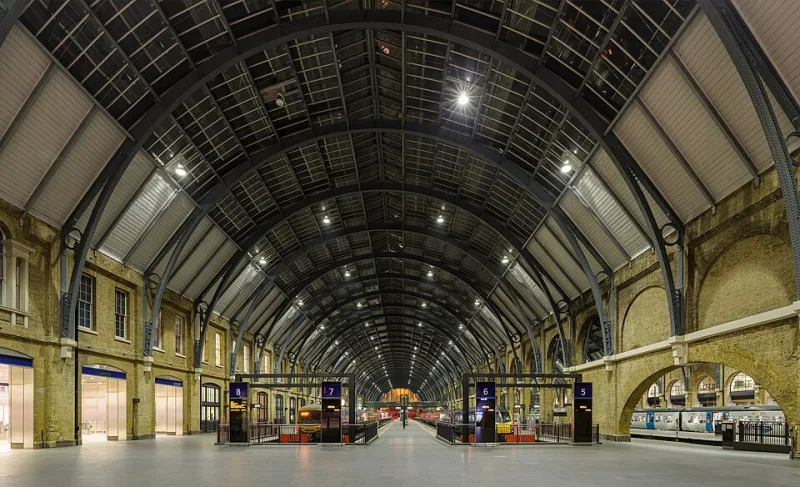
Photo: Diliff, CC BY-SA 3.0, via Wikimedia Commons
Infrastructure is one of the few property stories that can genuinely change a location’s trajectory, and one of the easiest to overstate. A new station, a faster service or a reopened line can widen a buyer’s search area, shorten a commute and bring forward regeneration. It can also be priced into values long before a train runs. By 2030, several UK corridors outside London have credible transport and regeneration pipelines. The task for investors is not to guess the winner. It is to stress-test the thesis.
Committed, planned and speculative
The first distinction is delivery status. A committed scheme has funding, consent and a construction programme. A planned scheme has policy support and design work but may still be pre-construction. A speculative scheme is an aspiration. Property markets often blur these categories, and the blurring is where disappointment begins.
Value uplift tends to arrive in stages: announcement, consent, construction and operation. The strongest investment cases usually combine an early-stage entry point with a credible delivery timetable and independent demand drivers such as employment, schools and amenities. A station alone is rarely enough.
Five corridors to stress-test
1. Birmingham–Solihull–Coventry
HS2’s Curzon Street terminus, the Midlands Rail Hub programme and local transit improvements give this corridor a unusually deep infrastructure story. Solihull is already expensive, but parts of Coventry and north Solihull offer relative affordability and established employment links. The risk is timing: large schemes can move, and new supply can absorb demand. Investors should examine station catchments, local plan allocations and the quality of the existing housing stock rather than buying on the HS2 label alone.
2. Huddersfield–Leeds–York
The Transpennine Route Upgrade is intended to improve journey times, reliability and capacity across the North. Towns such as Huddersfield, Dewsbury, Batley and Mirfield sit within the wider corridor and remain affordable relative to Leeds and York. The upside is strongest where improved services meet existing town-centre regeneration. The caution is disruption: construction works can affect commute patterns before benefits arrive, and some values already reflect upgraded connectivity.
3. Bristol–Portishead–Weston-super-Mare
MetroWest and the proposed reopening of the Portishead line are central to this corridor’s case. Bristol’s affordability gap has pushed buyers and tenants towards North Somerset, and improved rail links could strengthen that trend. Portishead has a strong owner-occupier profile, while Weston-super-Mare offers lower entry prices and larger stock. Flood risk, project delays and local opposition are material considerations and should be checked address by address.
4. Nottingham–Derby–Leicester
The East Midlands has a three-city corridor with relatively affordable stock, established employment and improving rail links through the Midlands Rail Hub programme. East Midlands Freeport and logistics investment add an employment dimension that is not solely dependent on passenger rail. The risk is that regeneration benefits cluster around specific sites rather than spreading evenly. Local research should focus on travel times to employment hubs, planning supply and the depth of the rental market.
5. Glasgow–Edinburgh–Falkirk
Scotland’s Central Belt benefits from strong city economies and ongoing rail investment. Falkirk and the surrounding corridor offer lower entry prices than Glasgow’s West End or central Edinburgh, with connections that could improve further by 2030. Scottish tax, tenancy regulation and energy standards require separate modelling. Investors should not import English yield assumptions without adjusting for those differences.
A local research checklist
- Confirm the scheme’s status: funded, consented, under construction or merely proposed.
- Check the delivery timetable and identify the official body responsible.
- Measure the station or stop catchment on foot, not just on a map.
- Review the local plan for housing supply, employment land and regeneration allocations.
- Compare current commute times with the promised future timetable.
- Inspect flood risk, road access and local amenity.
- Test whether rental demand exists today, not only after the scheme opens.
Yield modelling with conservative assumptions
A transport thesis should never replace a rent calculation. Model gross yield, net yield and cash flow using current rents, not hoped-for future rents. Stress-test for a two percentage point rise in mortgage costs, one month of voids and realistic service charges. Include capital expenditure for compliance and energy upgrades.
If the investment only works when a train arrives on time and rents rise sharply, it is not an investment case; it is a projection. Use infrastructure as a catalyst within the model, not as the foundation of it.
Exit-risk assessment
Ask who will buy the property on exit. A local owner-occupier market with good schools and amenities is different from an investor-only market dependent on yield. Check lending appetite, leasehold terms, cladding or building-safety issues and the depth of comparable sales. If the exit relies on a single large project, apply a discount to the price you are prepared to pay.
The Pioneer Property view
Transport improvements can widen search areas and support regeneration, but they do not create value in isolation. Employment, amenity, supply and affordability do most of the work. The five corridors above are worth watching precisely because they combine infrastructure with existing economic activity and relative value. They are not guaranteed winners. They are candidates for disciplined research.
By 2030, some of these schemes will have delivered. Others will have slipped. The investor who separates delivery risk from marketing narrative is more likely to capture the upside without paying for it twice.